
Project Planning
The backbone to a great idea is the ability to articulate what, where, when, why, and how. Project planning comes before funder selection so that you can stay true to your research while later being flexible to the funder’s goals. You must choose your research and then find the funding opportunities that will support your trajectory. Our project planning services position you for a fundable future.
Logic Models
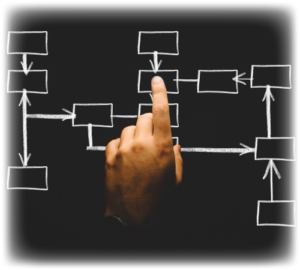
 What is it? A logic model is a one-page, compelling graphic (your road map) that tells the reviewer exactly what, when, where, why, and how. It is one of, if not the most critical, element of your proposal because it maps out the entire program or project. Within it, resources, activities or strategies, along with their deliverables (outputs) are aligned with the project’s intended short-, medium-, and long-term outcomes. The goal with the logic model process is complete alignment of all variables.
They are often sent along with concept papers for a Program Officer’s review before the proposal is submitted. Collaborators and partners can quickly see what is needed of them within a program, as well as what their participation results in. Evaluations are based on logic models in order to determine what exactly should be evaluated within the program or project.
Check out our logic model whitepaper (template and checklist included) entitled, How Do You Develop A Logic Model?
How can we help you?
- Develop succinct logic models
- Develop clear theories of change
- Confirm appropriateness of goals, objectives, outcomes (and outputs)
Related Services
Building a Collaborative Team
Building a collaborative team is an important element for successful funding, as it an increasing requirement for funding.
Learn MoreCoaching & Training
Coaching and training are about capacity building. Our coaching and training services can offer support through broader nuanced processes such as grant writing or through developing evaluation plans, or more task-specific items.
Learn MoreOpportunity Landscape
The opportunity landscape is the who’s and what’s of the grant funding world, and it is varied, yet specific.
Learn MoreEarly Career Mentorship & Training
Early career mentorship and training services are geared towards researchers with less than 3 years of relevant work experience.
Learn MoreArticles and White Papers About Logic Models
Technology Troubleshooting in M&E
Articles and White Papers About Monitoring & Evaluation To RCT or Not? Randomized Control Trials in Nonprofit Work Read More Whose Job is it to Evaluate? Read More The Problem with Relying Solely on Dashboards Read More Finalizing Reports: Statements of Differences Read More Load More
Read MoreM&E and Technology
Articles and White Papers About Monitoring & Evaluation To RCT or Not? Randomized Control Trials in Nonprofit Work Read More Whose Job is it to Evaluate? Read More The Problem with Relying Solely on Dashboards Read More Finalizing Reports: Statements of Differences Read More Load More
Read MoreTheories of Change
Articles and White Papers About Logic Models Baselines: The Bottom Line Read More Technology Troubleshooting in M&E Read More M&E and Technology Read More Theories of Change Read More Load More
Read MorePathways of Change Understanding the Timeline of Theories of Change
Articles and White Papers About Logic Models Technology Troubleshooting in M&E Read More M&E and Technology Read More Theories of Change Read More Pathways of Change Understanding the Timeline of Theories of Change Read More Load More
Read MoreFAQ About Logic Models
Yes, we have consultants experienced with quantitative and qualitative analysis. We can help you with coding a portion of your qualitative data, preparing the data for analysis, and drafting an outline of your results. Once we have a firm idea of how your results chapter is outlined, our consultants can help.
Yes, we have consultants experienced with quantitative and qualitative analysis. We can help you with coding a portion of your qualitative data, preparing the data for analysis, and drafting an outline of your results. Once we have a firm idea of how your results chapter is outlined, our consultants can help.
Our editors only review content for clarity, if you are looking for specific analysis and methodology help, we have a range of qualified quantitative, qualitative, and mixed-methods consultants that can help. Please see our Content Review by a Consultant section.
Yes! Our editors have experience working with style guidelines from around the globe. Formatting tasks include, but are not limited to preliminary pages, font, heading styles, margins, page numbers, spacing, tables, figures, references, etc., based on your style guidelines (Style guides supported include, but are not limited to APA, AMA, MLA, ASA, ACS, Chicago, Turabian, etc.).
We offer a wide range of editing services, including: proofreading, copyediting, reference and citation formatting, content review, and document formatting.
Yes! Our editors have experience working with university and style guidelines from around the globe.
Yes. Document preparation is crucial for journal manuscripts. Each discipline follows a style guide, and each journal has its own strict submission guidelines. Journal reviewers are detail oriented, and manuscripts need to be similarly formatted. Our editors provide detailed reviews, edits, and support for journal manuscripts from inception to submission, including preparing a manuscript from your dissertation.
Yes! Our editors have experience working with researchers and publication guidelines from around the world.
No. Our editors cannot write the content of your document, but if you have the general idea put down into a sentence, we can edit it to convey the specific meaning that you are trying to get across.
Yes, we offer three editing options: Edit Editing and Proofreading: Basic Visual proofread, Copyediting, and In-Depth Line-By-Line.
Yes! In the Edit Citations and References: Reference Formatting phase, our editors will make the necessary changes to your reference entries to ensure adherence to your style guide.
Unfortunately, our editors cannot create a complete reference list for you, our Edit Citations and References: In-Text Citation Check phase focuses solely on confirming that all sources that are cited in the text are listed in the reference section. However, we will make a note in your reference list if you are missing a citation.
Yes! Please see our Document Formatting section.
Our team has timelines that range from rush to standard depending on the services you are needing. Each estimate is customized to your editing or writing service, timeline, and quality of your document.
Yes, depending on the phase of editing you are requesting. We are happy to perform copyediting and content reviews in sections, however to perform effective document formatting and reference/in-text citation reviews we as for the complete copy of your most updated draft.
Yes! Please see our In-Text Citations and References section.
Confidentiality is very important and we are happy to provide you with a Nondisclosure Agreement at any point the process.
Our editors are very experienced and will do their utmost to correct all errors in your document.
Our editors are language experts with interests in different subject areas. We ask that you indicate your field of study when you fill out our request for work form. We�ll make sure that the editor who reviews your work is familiar with your discipline and its specialist vocabulary.
We will conduct as many rounds of editing and writing as you need.
Yes. We will send you two versions of your final document. One will contain all the mark ups from our edits and the second version of your document will be a �clean� version ready for submission.
We will conduct as many rounds of editing as you need.
Our editors specialize in all styles, including but not limited to APA, AMA, MLA, ASA, ACS, Chicago, and Turabian.
The service(s) you select depends on your needs, please see our main page for a full list of services.
We can provide you a quality guarantee and we will work with you till you are satisfied with the manuscript. However, we do not guarantee publication or acceptance as that depends solely on the entity you are submitting to.
Yes, we will conduct the service on up to the first three (3) pages of your document and return it with a customized estimate.
Indexing improves editing and writing processes by organizing content, structuring findings, and ensuring consistency in terminology, allowing consultants to create clear, cohesive, and impactful research reports for clients and stakeholders.
Career services in consulting can offer workshops, resources, and personalized coaching to help professionals enhance their research writing and editing abilities, including techniques for clarity, coherence, and professional presentation of findings.
Consulting professionals can integrate in-text citations seamlessly by placing them at appropriate points within sentences or paragraphs, using parenthetical citations or footnotes according to style guidelines, and providing clear references to support their arguments or findings.
Consultants should balance precision and reader comprehension by defining terms, employing consistent terminology, utilizing indexing tools, providing contextual examples, and tailoring explanations to the audience’s knowledge level when indexing technical terms, industry-specific jargon, and acronyms in research reports.
Career services can provide guidance on designing robust research methodologies, selecting appropriate data collection methods, analyzing data accurately, and interpreting results effectively, thereby strengthening the quality and impact of consulting research.
What are common mistakes to avoid when formatting in-text citations in academic or formal writing?
Common mistakes to avoid when formatting in-text citations include missing or incomplete citation details, improper placement within sentences or paragraphs, inconsistent formatting across citations, and neglecting to include citations for paraphrased or summarized information from sources.
The process is similar to how research analysis would be conducted, in that an evaluation and coordinating analysis plan would be developed early on in project planning, both tied to key analysis questions that drive the methods used.
This depends on the type of data you have and your target audience, but there are many options when it comes to data visualization. A few examples include Tableau, SAS, and Nvivo.
The major advantages of longitudinal analysis are that you can assess change or show clear patterns, as there are multiple time points of data collection. The major disadvantages are that this type of study takes longer to do, is more expensive, and is more limited in terms of breadth of experience.
If future reporting is easy and quicker due to development of standardized data processing and presentation elements.
Data can be collected through the use of standardized checklists or observation guides, or through hand-written or voice-recorded field notes that collect open-ended narrative data.
Document review can provide important background information for an evaluation, and it can bring to light considerations or issues around a project that may not be possible through other means of data collection. Document review is also typically unobtrusive since it does not require collecting data from participants, and it can be relatively inexpensive.
Data from document review can be inaccurate, incomplete, biased, disorganized, or irrelevant, therefore, it can also be time consuming to compile, organize, and analyze a large volume of documents.
It can depend on the specific project, but typically focus groups are best composed by homogenous groups, or groups of people who share common attributes. The commonalities shared by a group should be determined by the evaluation goals, the topics being explored, and the cultural context of the evaluation.
Semi-structured interviewing is the most common type, which includes an interview guide with pre-determined open-ended questions, but also the flexibility of allowing spontaenuous follow-up questions and probing to yield in-depth data.
No, not all surveys need to be written in Likert format. The advantage, however, is being able to quantify change. If you are assessing outcome change, Likert scale options are a great way to be able to show a demonstrated change, if any, between two time periods.
Survey length is dependent on the purpose and, ultimately, the audience. Ideally, surveys should take no longer than 15 minutes for respondents to complete.
The number of questions depends on an evaluation’s purpose and goals, and the type of questions being asked. It is important that before you launch a survey, you test it with a sample to ensure it is understandable and reasonable in length. Ideally, surveys should take no longer than 15 minutes for respondents to complete.
There are many things to keep in mind when creating an evaluation plan, but some considerations are the program/project goals, the evaluation questions that need to be answered, who the key stakeholders are, program/project activities, outputs, outcomes, and any challenges or other factors that may affect the program.
During the development of a new program or when an existing program is being modified for a new population.
Goal-based evaluation, outcome evaluation, impact evaluation, cost-effectiveness, and cost benefit analysis.
Impact assessment should be considered early in planning, and its timing should be carefully considered. It should not be conducted too early because there may not have been enough time to develop longer term impacts, while if conducted too late, the impacts may be declined. The assessment should be conducted when its intended use is clear and its findings used for necessary decisions.
Generally speaking, outcome evaluation can begin to measure changes at least six months after program implementation.
As soon as a program is implemented, and during program implementation.
Conferences will usually provide their own guidelines for presenting your work. More and more, conferences are moving away from highly text-heavy presentations and icon-graphics. They center more heavily on key findings in layperson terms, with supporting documentation related to your actual methods. Simplicity and an effective use of white space are key.
Lessons learned should come from multiple sources, not just a single source, so that the information gained can be reinforced and triangulated.
Starting with your methods section, and then working your way through your discussion, literature review, and introduction, and finally writing your abstract can be a helpful order to follow.
Some best practices include basing recommendations on evaluation results, involving key stakeholders in making recommendations, and using clear and specific language in writing recommendations.
Key stakeholder engagement in all evaluation phases, including in the reporting phase, is typically an important part of the evaluation process. Engaging stakeholders in reporting can help define the report audience and make sure the report findings meet the evaluation purpose.
We tailor the level of our involvement to the needs of each client. Some clients prefer guidance and oversight every step of the way, while others prefer only higher-level guidance.
Stakeholders will vary based on project type, but it is good to include those that represent various levels of the project from beneficiaries and community leaders to program coordinators and board members.
Involvement will vary based on the type of evaluation. Stakeholder involvement should be discussed at the very beginning of the project, and then plans made for their involvement put in place. At a minimum, key stakeholders should be invited into project planning to ensure their voices are heard on behalf of their commnity members, and their review and feedback of each major deliverable should be sought.
When thinking about cultural considerations, assessing your own cultural self-awareness is a good place to start so that you are open to and value differing points of view and approaches. Engaging stakeholders who reflect the diversity of the community in which the program is taking place is another important consideration.
The evaluation team, whether this involves internal or external evaluators, as well as key stakeholders, should be involved.
Some questions include: What is the budget for evaluation? Can the information needed be collected internally? What is the timeline? Are there internal staff members who have training and experience in evaluation-related work? Is an independent evaluator required by a funder?
A logic model is bidirectional, meaning it can be read from left to right or right to left (or top/bottom if created in that manner). Generally, your planned work in the form of resources/inputs and activities on the lefthand side of the model should form an apparent connection with your intended results in the form of outputs, outcomes, and impact on the righthand side of the model.
The data collected for M&E should be grounded by a solid logic model and tied to the outputs and outcomes stated therein.
No, you do not need external involvement in the collection of M&E data –assuming you have a plan and the expertise to implement it. Oftetimes, it is good to hire somone with M&E expertence to help you set up your M&E plan and train your personnel on how to collect, analyze, and report the data. After that point, you should be well positioned to maintain your M&E program.
Your data should reflect what is in your logic model, and the depth to which you collect data should reflect your organization’s ability and commitment levels. With any program, you could feasibly collect large amounts of data, but if there is no plan to actually use the data, it is an unneccessary task (and goes against the principles of data governance). A good M&E plan will consider only the data that is necessary for program effectiveness and sustainability.
Consulting projects may use a variety of data sources for longitudinal analysis, including surveys, interviews, observational data, administrative records, financial data, and other relevant metrics collected at regular intervals over time.
Consultants can employ data management techniques such as data validation, cleaning outliers, handling missing data, standardizing data formats, and maintaining data integrity protocols to enhance the quality and reliability of longitudinal data used for analysis.
Common statistical methods for longitudinal analysis include growth curve modeling, repeated measures ANOVA, survival analysis, and mixed-effects models. Software tools such as SPSS, SAS, R, and Stata are often utilized for conducting complex longitudinal data analyses and generating meaningful insights for consulting projects.
Projects involving program evaluations, performance assessments, quality control audits, behavior studies, and process improvement initiatives often benefit from using direct observations to gather accurate and contextually relevant data.
Evaluators should plan observation protocols, define observation objectives and variables, train observers for consistency and accuracy, use standardized observation tools or checklists, ensure ethical considerations, record observations systematically, and analyze data rigorously.
Evaluators can enhance reliability and validity by conducting inter-rater reliability checks among observers, establishing clear criteria for observed behaviors or events, triangulating observation data with other data sources, addressing observer biases through training and supervision, and documenting observation procedures transparently.
Focus groups are structured discussions led by a moderator to gather insights from a group of participants about a specific topic. In evaluation, they are often used as a qualitative research method to understand client perspectives, gather feedback on products or services, and explore market trends.
Challenges may include recruiting diverse and representative participants, managing group dynamics to ensure balanced participation, interpreting qualitative data subjectively, and maintaining confidentiality and ethical standards throughout the process.
Focus groups complement quantitative methods such as surveys and data analysis by providing deeper qualitative insights and context. Integrating findings from focus groups with quantitative data enhances the overall understanding of client needs and market dynamics.
Conference presentations offer consulting firms visibility within their industry, enhance their reputation as thought leaders, attract potential clients and collaborators, gather feedback and insights from peers, and facilitate knowledge sharing and collaboration.
Organizations can leverage conference presentations to showcase their expertise, highlight successful client collaborations, demonstrate thought leadership, engage with industry influencers and decision-makers, and foster networking opportunities that can lead to new business opportunities.
Yes, you can adapt conference presentations for virtual or hybrid formats by leveraging multimedia tools, interactive features, virtual networking opportunities, pre-recorded segments, live Q&A sessions, and incorporating engaging storytelling techniques suited for online audiences.
Every qualitative research project is unique. There are several issues that inform the length of arts-based and arts-informed research, e.g. recruitment of participants, type of data collected. Both types of research in Qual Research Design: Arts-Based/Arts-Informed have similar length of time. Some can be as long as 8 years and other projects could be as short as 3 months.
Each arts-based or arts-informed research is unique due to the nature of qualitative research as a method of inquiry on topics that have little to no research. A researcher may choose to focus on oneself or one participant or have over 25 participants. Some research in Qual Research Design: Arts-Based/Arts-Informed have no participants.
Anyone interested in arts-based or arts-informed research does not need to be an artist. However, familiarity with the types of arts that is important. Knowledge and history of using the artistic modality, e.g. painting, photography, performances, aid in defining how the data should be analyzed and collected.
A case study examines a subject using multiple types of data. The accessiblity of information from a participant, timeframe, and the use of secondary data will inform the length of time. There is no general length of time. The most important aspect is to ensure that the research questions inform the rationale for a case study and if time is part of the boundary for collecting data on a case.
A case study is an in-depth exploration of a single person or more than one case. Some case studies do not include participants, but a system, e.g. an event, program. Therefore, data collected may not include participants. Most case studies that include participants have one participant.
Delphi is appropriate when a researcher needs to gain a consensus from experts on a topic of interest.
Delphi study requires three or more rounds of collecting data from experts on a topic. A project can take 3 or more months.
Availability and access to participant-experts will inform the number of participants. Some Delphi studies recruit as much as 1000, while some have a panel of 7 experts.
Ethnography requires the immersion in a culture for an extended period of time. Successful ethnographic studies should be conducted no less than 6 months.
There are different forms of ethnographic research designs. Some forms are discipline-specific, e.g. feminist ethnographies, realist ethnography. Some ethnographic projects are informed by the types of settings for the immersion and collection of data, e.g. medical ethnography, business ethnography.
A generic design does not directly align with a specific qualitative research design. If your research contains methods from more than two designs. It could be defined as generic. For example, you want to focus on shared experiences (Grounded Theory) of experts in higher education (Delphi) as a participant-observer in an institution for an academic year (ethnography); this will be considered a generical qualitative design.
Each generic qualitative research design is unique due to the diverse elements from a variety of qualitative research designs. The number of participants may be one or more than 25.
The grounded theory is an iterative process. Thus, the length of the study will depend on the number of participants, time spent on the analysis at each iteration, and recruitment process. It is not likely to complete a grounded theory in less than 3 months.
The number of participants for grounded theory varies. It is suggested to have no less than 20 participants. However, data saturation is more important than the number of participants.
Narrative research consists of several in-depth interviews and other types of data to chronologically arrange participants’ story or life events. The availability of data and participants will inform the length of the study. Some narrative projects take 3 or more months.
The similarity between the analysis of a narrative inquiry and other qualitative methodologies is the coding of data. However, the difference is that the codes are used to chronologically arrange an event or participant’s life to tell a story.
Participatory action research requires collaboration with participants from the beginning to the end of a project. Sometimes, it is not possible to have all participants’ input at each stage. It is best to aim for the majority of participants to provide feedback at all stages.
The number of participants for a participatory action research varies. It is suggested to have at least 15 participants.
Each phenomenological study differs. The length of time depends on amount and type of data collection, analysis, and other unexpected issues that may emerge in the field. It is unlikely to complete a phenomenological research under 3 month unless there is more than one researcher.
There are roughly three types of phenomenological research designs. The choice of a type of design is informed by your research questions. Transcendental seeks to understand the direct lived experiences of individuals and groups. Hermeneutic phenomenological design interprets the meaning and context of participants’ experience. While existential describes the lived experiences of a person or group through those participants’ views.
Each phenomenological research projects requires a different number of participants. The recommended number of participants range from 5 to 25.
No. The size of the font and the criterion for the poster presentation are more important.
Many conferences suggest clear, simple, and multicolored visualizations. Visualizations must include a key and description. The types of visualizations varies. It would be helpful to ask conference organizers about acceptable types of visualizations.
Some conferences focus on research, others are practice-based, and some are a combination. Depending on the conference, the length of the presentation could inform the type of format and what would be most appropriate from to present on qualitative project.
It depends on the institution. Some colleges/universities have a minimum page length; while others do not. It is necessary to include all required elements for a qualitative dissertation according to the institution’s standards.
There is no limited number of images and quotes to include. It is helpful to have at least one quote and/or image for each theme.
Qualitative research is not widely accepted as evidenced-based. This is due to the ongoing expectation that evidence-based information need to include statistical analysis, such as clinical trials. Qualitative data has been used in evidenced-based research, but it is not the main source of information for clinical practice.
It is more important to include elements of rigor to verify how you develop conclusions for your research. Evidence-based recommendations should include information that conveys that your findings are trustworthy.
Executive summaries are popularly used in businesses and other settings where reading standard elements of a research, such as literature review, methods, and analysis, are not as important as a brief synopsis for quick decision making.
Some organizations provide the main points that needs to be covered in a summary, but others do not. The main aim is to keep the summary brief, no more than 5 pages.
Yes, it is possible. You may need to select the most appropriate information for typical readers of an article, book, or op-ed.
It depends on the expectations of the entity where you will be submitting your op-ed. You will need to consider the most appropriate information for the typical readers of the op-ed.
The audience of your qualitative research will help you to know if it is acceptable for you to use terms and phrases that are in your discipline or align with qualitative research. Using examples of similar writing could help you make that decision and get clarification from the editor or institution to which you are writing.
Some qualitative research designs use specific codes for analysis. The types of codes are also informed by your research questions.
Ideally, the main persons involved in a research project should code the data. However, if this is not possible, coders should become familiar with the data and research questions before coding the data.
Coding helps you to understand how the data answers your research questions through attaching a word or phrase to portions of data. The amount of data and your analysis process will information the number times. Most qualitative research do not count the times that they coded the same set of data. Many believe that there should be at least 3 reviews of the data to ensure that you do not miss anything.
Field notes are the observations recorded while data is collected. On the other hand, memos are observations and other thoughts that emerge during data analysis.
There are several different types of content analysis. Some types are popularly used in particular settings or discipline specific. Your research questions will inform the type of content analysis that is most appropriate.
Computer-assisted qualitative data analysis software can be used for content analysis, but is not mandatory.
There are bar charts, pie charts, word clouds,flow charts/models, cluster diagrams, sociographs, geovisualizations and other types of qualitative data visualizations. Some qualitative data analysis software have data visualization options. We can help you choose the most appropriate visualizations for your coded data.
It is best to vary the types of visualizations throughout your qualitative report/results. A good rule of thumb is to have one visual display for each theme.
You will be able to answer your research questions related on the function and definitions of language through the theme that emerge on your research topic. This can only be achieved after coding your data.
The amount of data needed for discourse analysis depends on your research question(s). Projects consist of texts from a wide variety of sources.
Data saturation is an important element in grounded theory. It is the process of collecting data until no new information is found. Therefore, the amount will vary depending on your research question(s) and data saturation.
Yes, many qualitative research project use a different type of analysis from the research design. The research questions should inform the type of qualitative analysis.
Yes, your research questions inform the type of analysis for your project.
Yes, your research questions inform the type of analysis for your project.
Your level of comfort with technology, available time to learn the software, cost, and your computer’s compatibility to use the software will inform which QDAS is best for you.
No. You can use pen, markers, pencils, and highlighters on paper, sticky notes, and cut paper to code qualitative data.
Yes. Some qualitative researchers prefer to use writing tools and paper for analysis and some use QDAS. If there are more than one collaborater on a project, preference for computer or writing may vary. It is helpful to keep the medium of analysis consistent to save time when merging the coded data.
Yes, all QDAS support a variety of qualitative analyses including thematic analysis.
Yes. Thematic analysis is considered one of the basic types of analysis in a qualitative project.
A priori themes vary according to the number of research questions. A rule of thumb is to have at least one theme per research question.
Your research questions will inform the number of themes. Many qualitative project have between 3-6 themes.
Each qualitative approach has elements that differentiate them from others. The aims/goals/questions will inform the type of research design. For example, if your question seeks to explore cultural practices and values in a group that has limited information, it is likely that you will need to conduct an ethnographic study.
Qualitative research question vary in complexity depending your discipline. The key features in a qualitative research is to ask open-ended questions that seeks to find information on a case, culture, groups of people, and phenomena. Some discipline require that you include concepts unique to the field; while others do not. It is best to keep each qualitative research question focused on one aspect of an issue.
You should use your research questions to guide your analysis. Therefore, your questions should not have more than one concept to explore because analysis may be more challenging to complete.
Your research questions aids in first identifying your research design, types of data collection, how data is collected, and your analysis. It helps you to understand if your resarch can be collected and the settings needed to do it.
Ethics integrated in each project are to protect participants. Some ethical considerations include: confidentiality, informed consent, participants and researchers� risk in the project.
Protection of information is important in research. If you have participants, you need to decide on how the data will be collection, the location, and techniques to deidentify their participation. You can use software to specifically encrypt data or have password protection.
There are computer software that you can use to protect participants’ information. You should also limit the number of people who access the data. If the data is collected physically, you will need to have portable locked cabinets.
It is important to know the ethical considerations for conducting research in that country. You may need to get approval in the locale before doing your research. Access and security of data need consideration. You will need to know the language and/or dialect and if a translator is needed. The cost of doing your qualitative project must be your top priority if you need to travel, make accommodations, and other expenses.
Consistency throughout the analysis is necessary. Decisions about secure storage of the data should be made even before data collection begins. The same process for data analysis must be applied to all data regardless of where it was collected.
It depends on your research questions. A research question informs the setting, participants, design and focus of your study.
Gaining knowledge about the culture before developing your research proposal will aid in successful completion of your qualitative research in a setting outside of your culture. This may require doing research on current and past resources that explain the culture. Establishing a collaborative relationship with members of the culture, including the gatekeeper/leader. Have an open mindset that your research may change during data collection as you learn more about the culture.
Commitment to consistently recording your thoughts and experiences can build reflexivity.
Develop a relationship with an interpreter before your research begins. If possible, seek feedback from the interpreter when you are developing your questions for interviews/focus groups. It is helpful to provide a copy of the research questions, procedure, and interview/focus group questions (if applicable).
Training is providing knowledge on how do to do parts of a qualitative research. On the other hand, we provide coaching or support to people who already have the knowledge but need help in applying that knowledge to successfully complete their qualitative research project.
Yes. We will need to get information about your overall project before providing focused coaching.
Yes. We will need to get information for your overall project before providing coaching at later stages of qualitative research project.
The main elements of a qualitaitive research proposal varies depending on the institute, discipline, setting. However, most proposals include a research/project rationale, research questions/goals/aims, population/participant background, location of the project, purpose, research design, data collection methods, data analysis plan, ethical considerations, and timeline.
The purpose of a grant proposal is to seek financial support for a qualitative project. A qualitatve research proposal can be design to justify funding for a project, but not all qualitative research proposals aim is to seek funding.
Each qualitative research project is unique. The amount of data in the arts is informed by your research design and procedure. Some designs require data saturation. While some projects have a limited amount of data.
Yes. Data saturation could emerge arts data through the repetition of similar types of arts in the same category, e.g. landscapes and green color (in visual arts), F sharp (musical note), quick movement of the index finger to the thumb (dance/movement).
Your research questions should align with the interview/focus group questions.
Qualitative research interview/focus group questions should be open-ended to avoid asking leading questions. It is best to probe participants’ responses if you are using semi-structure or unstructured interviews/focus groups.
If you have the resources, your notetaker can take notes and observe the focus groups.
An interview usually lasts 1 hour; a focus group usually is approximately 1.5 hours. The length of time varies depending on the number of questions and participants’ responses.
Journaling can be completed in a notebook, tablet, or another types of electronic devices.
Journaling tracks a researcher’s experiences throughout a research project. It can also be included as data for analysis.
No. It depends on your research question and design.
Your research design and research questions helps you idenitfy the most suitable type of observation.
The length of field notes varies. A field note is approximately 1 page.
The following should be included in a field note entry: date, time, location, activity, participants, and description of entry.
Your research design, budget, and feasibility of the project will inform the number of participants.
Yes, you can change your recruitment process after it begins. You will need to ensure that you record your reasons and that recruit aligns with your research design.
Yes. It depends on your research design.
Both archival and secondary data are information that exist before starting your own research project. Archival data is usually referred to as information collected by an institution and used for a variety of purposes. Whereas, secondary data is informaton collected from a previous research project.
You will first need permission for the owner/researcher of the data. Your research questions will guide your design and method of analysis.
Using social media as data has increased in recent years. Almost every qualitative research design can use social media data if it can answer your research questions.
It is best to err on the side of caution and seek permission to use their data unless there is an indication that it is public information.
There is no limited number of questions in a qualitative survey. However, it more likely that qualitative research projects have 12 questions or less.
Qualitative research seeks to explore understudied topics and avoid making about assumptions on a topic. Therefore, to maximise researcher and participants’ time open-ended questions are strongly suggested.
No. It is helpful to have at least one method of comparability in your qualitative project.
No. It may not be feasibility to implement confirmability at each phrase of a qualitative project. However, it is helpful to have at least one method of confirmability in your project.
No. It is helpful to have at least one method of comparability in your qualitative project.
No. It is helpful to have at least one method of dependability in your qualitative project.
Common challenges include variations in data quality, differences in participant characteristics or contexts, subjective biases in data interpretation, evolving research objectives or scopes, and managing complexities in multi-site or longitudinal studies.
Ensuring comparability enhances the trustworthiness of qualitative research findings by allowing for systematic comparisons, identifying patterns or themes across data sets, reducing the impact of confounding variables, and supporting the generalizability or transferability of insights.
Strategies include developing clear research protocols and guidelines, training researchers or interviewers consistently, using standardized data collection tools and protocols, conducting pilot studies or pre-tests, employing inter-rater reliability checks, and documenting data analysis processes rigorously.
Technology tools such as qualitative data analysis software (QDAS), collaboration platforms, cloud-based repositories, and data visualization tools can streamline data management, facilitate team collaboration, ensure version control, and enhance transparency in data coding and analysis processes.
Common challenges include researcher subjectivity, interpretation biases, lack of transparency in data analysis processes, limited participant diversity or perspectives, and managing power dynamics during data collection and analysis.
Ensuring confirmability enhances the trustworthiness and objectivity of qualitative research findings by reducing the influence of researcher biases or preferences. It allows for independent verification of results and strengthens the credibility of insights and recommendations derived from the research.
Strategies include establishing clear research protocols and guidelines, maintaining an audit trail of data collection and analysis processes, using multiple researchers or coders for data analysis with inter-rater reliability checks, engaging in peer debriefings and member checking with participants, and transparently documenting methodological decisions.
Transparency in research processes, including data collection, analysis, and interpretation, is crucial for enhancing confirmability. Transparent documentation allows for external scrutiny and validation of findings, fostering confidence in the reliability and objectivity of the research.
Common challenges include researcher biases or preconceptions, limited participant diversity, data collection and interpretation subjectivity, ensuring data saturation, managing researcher-participant relationships, and maintaining confidentiality and ethical standards.
Ensuring credibility enhances the value and impact of qualitative research findings by providing clients with trustworthy and actionable insights. Credible findings support evidence-based decision-making, inform strategic recommendations, and build confidence in offered services and expertise.
Strategies include thorough research planning and design, transparent and ethical data collection practices, systematic data analysis using established frameworks or codes, engaging in continuous reflexivity and peer debriefings, triangulating data sources, and validating findings through member checking or external audits.
Professionals can communicate credibility by transparently explaining research methodologies, validation processes, limitations, and strengths in reports or presentations. Providing examples of data triangulation, member checking outcomes, and researcher reflexivity can further reinforce the credibility of research findings to clients.
Dependability is achieved through rigorous research design and planning, standardized data collection protocols, systematic data analysis techniques, maintaining an audit trail of research processes, and conducting reliability checks or triangulation of data.
Common challenges include variations in data collection procedures, researcher subjectivity or biases, changes in research objectives or scope during the project, evolving participant dynamics, and ensuring consistency in data interpretation across research team members.
Ensuring dependability enhances the validity and reliability of qualitative research findings by demonstrating the consistency and repeatability of results. Dependable findings support the credibility of insights, facilitate comparisons over time, and inform sustainable strategies for clients.
Strategies include developing detailed research protocols and documentation, training research team members consistently, using standardized data collection tools and techniques, conducting regular reliability checks or peer debriefings, maintaining transparency in data analysis, and documenting methodological decisions.
There is a nearly endless supply of data opportunities. Awareness of potentially untapped resources often requires a research background beyond the specific field in question.
There are multiple platforms for collecting, organizing and analyzing data across different types of operations and infrastructures. The best fit for a particular use involves balancing cost, simplicity, data platform collection approaches, and technical capacity to use particular analytic methods.
There are numerous statistical analytic softwares and platforms capable of modeling and simulation based on known and variable inputs. Experience modeling these simulations helps to properly contextualize and dial results in order to apply and garner feedback useful to processes.
Secondary data sources publish research collected from academic, governmental, philanthropic, journalistic, medical and other sources to public, private, and academic channels. These secondary data sources can complement, replace, reshape, or enhance your research goals and approach.
Existing reviews and studies give access to best practices, market research information and infrastructure developments with limited cost in resources and time. It is incredibly valuable to understand which reviews/studies will be profitable and applicable to portions of your operations.
Combining offline and online data collection is normally straightforward provided that the collection mechanisms are compatible. Data is often collected in a CSV or other standard formatting procedure that can be exported to Excel or another software packaging system that can be cleaned and analyzed.
Everyone knowingly or unknowingly misses out on major data opportunities. Determining the usefulness and costs of acquiring or ignoring data opportunities generally requires a multidisciplinerian team of individuals with diverse research background and connection to data systems and sources.
There are many academic, philanthropic, governmental, and professional sources of data that are available for free, at low costs as well as higher costs. Understanding the benefit, need, and fit for these alternate data sources will help determine which sources can be practical and profitable for your needs.
Data reviews will generally save time and money that reasonably and affordably replicate research that is helpful, necessary, or enlightening in areas of a program or project that will impede, expedite, or ignore critical components of whatever you are trying to do.
Predictive analytics and machine learning take information that is readily available to you and make predictions about future events based upon your data, existing theories, algorithms, and probability. These approaches may help identify future opportunities and threats in ways that allow you to have as much control and time to react to imporant events as possible.
Good research design is well balanced, usually incorporates a mixed method approach combining quantitative and qualitative processes and is fully informed by known assumptions and limitations given constraints, targeted outcomes, and informed input by requisite stakeholders.
Data processes benefit from a multidisciplinarian approach across qualitative and quantitative skillsets. Assessing the research design, data collection, data cleaning, analysis, results and reporting steps are all important components of robust data processes. Sometimes a fresh perspective or third party consultant or coach can help shore up potential weaknesses in process.
Investing in data cleaning adds an often overlooked integral layer of accountability and rigor to your data process. Data cleaning and preparation will ultimately simplify and maximize what the data does and does not tell you in analysis by ensuring the data is valid, has no issues with missing data and meets require assumptions for desired analyses.
There will likely be some weaknesses in each of the various steps of your data processes. It’s important to be aware of these from the research design stages in order to identify problems that are likely to arise and/or compensate or adapt to avoid known pitfalls. Sampling bias, technological issues/disparities, missing data, open surveys without forced responses, nonnormal distributions and many other individually small issues can be problematic in the data process when added to others.
Data mining seeks to discover patterns in data whereas data analysis tests a hypothesis to which the answer affects processes or phonemena.
Analytics projects generally require research design/methodology, data collection, data cleaning, analysis, results, presentation, and implementation. There are numerous intermediate processes for various steps depending on how customized and complicated the project is.
Research that is not practical or readily adaptible for implementation is wasteful. Determining the correct advanced analytics that are ready for actionable steps is a critical part of research design and methodology.
Effective research design will consider the cost benefit analyses of multiple types of analytic approaches before determining the right approach. The best approach may encompass several methods, but trying too many methods will likely result in wasting an excessive amount of time and resources.
It is essential to collect accurate information that is validated and reliable from the appropriate target audience in order to apply the feedback of the analysis to the intended problem or situation. Failure to correctly identify and assess any of these components will undermine the veracity and magnitude of findings.
Using data of unknown or questionable integrity jeopardizes the impact of analyzed results. A strong research methodology that prioritizes data integrity is essential to the analysis plan.
Research design, research instrumentation,
Certain patterns in responses warrant cases to be removed to protect the integrity of data. Cases should be flagged where respondents answer too quickly or slowly. Additionally, responses may need to be removed from participants who drop off after certain points, answer with limited to no variance or answer antithetical questions inconsistently.
Non-normal data can be analyzed using non-parametric analyses or other analysis that require less strict assumptions. Additionally sometimes it is beneficial to transform non-normal quantitative data into categorical data which can be normally distributed by using ranges of values for categories.
Ideally there is less than 5% missing data, but the importance and impact of missing data depends upon what data is missing, what type of data is collected, the intended analysis and the relationship between variables that are missing large amounts of data.
Data that is truly not MCAR you need to figure a way to adjust for the non-random impact of missing data. Imputation is often the best way to use available data to account for missing data predictions in analysis.
Particular assumptions about the shape of the distribution, parameters, variance and other data set factors need to be met for specific types of analyses. Failing to meet assumption requirements will severely undermine analysis potential and relevance.
Factor analysis, validity studies and reliability analysis each play roles in maximizing the reliability and potential impact for a created scale or instrument with multiple subscales.
There are so many different statistical packages/softwares to collect and analyze data. Picking the right one depends on the nature of data and the desired analysis. Generally it is best to clean and analyze the data without editing or changing the raw data.
Statistical packages offer some combination of usability, robustness, modeling, visualization and user innerface. Certain softwares are more suited for the majority of projects while other niche and specific projects are suited for more complex, in-depth or particular softwares.
Selecting the appropriate analysis depends on the nature of variables and the characteristics of those variables.
A one-sample t-test compares measured values against the mean values for known (published) or hypothesized values.
Small sample sizes will have lower statistical power. This requires a greater effect size in order to obtain significant findings. This means that if the expected difference between two different groups is not large enough, it will not result in significant findings for smaller samples in certain analyses.
Effective database management allows you to organize, store, retrieve, and analyze data in consistent,predictable and repeated manner with the highest levels of efficiency and integrity of data.
Data that is not consistently managed is rife for intentional or unintental misuse in potentially critical manners. Data that is not actively managed is likely to be mismanaged.
There are a variety of programs, software and hardware to collect data across formats, locations, and sources. The fit will depend on the prioritization of cost, speed, data integrity, security, and access.
The source of data collection should optimize utility, affordability, and integrity. This will depend on who is collecting what data and from where. The answer to these questions will direct a strategy toward optimal data source and collection.
There is context to all data. This context is not always clear or obvious, but making decisions based on data requires understanding what the data shows or suggests.
The survey needs to be implemented with a group representative of the problem and purpose being pursued. Depending on the research design, you will likely want to survey people with no relation to the problem/purpose, some relation to the problem/purpose, and complete relation to the problem/purpose. Sample sizes can be determined by the represented sample population studied and the type of analysis pursued.
Factor analysis, validity studies and reliability analysis will help you determine if your survey is good enough for your intended need.
There are a nearly infinite amount of existing surveys designed to measure nearly everything. The right survey may work for your project depending on previous use of the survey and your target audience and targeted impact.
Good surveys produce quantitative results that are born from qualitative design and research. A mixed method approach and literature reviews will often form the foundation to pilot surveys designed to measure complicated or latent constructs.
There are a variety of online survey options available at various price points. Survey collections that help generate a particular demographic profile to respond to your survey tend to be more costly than simple sites that will collect data from anyone with access to a link.
Online survey collection often makes it easier to obtain desired data, but it must be readily adaptible to export to a statistical analytical package such as SPSS, STATA, R, etc.
Quantitative Sampling errors can be avoided by dividing the population into groups and comparing subgroup results compared to the other groups and the entire group. Additionally, sometimes the most affordable and feasible solution is to increase the sample size. Higher levels of knowledge and published research on populations can help identify and avoid sampling errors.
Quantitative Sampling weights should be used to ensure that collected data is representative of the population evaluated. Weighting should be based on a few select critical demographics most influential in determining the sample population.
Raking weighting is the most prevalent method of weighting and is based on known population distributions of certain variables. Matching and propensity weighting are alternative weighting methods that could be beneficial depending on the scope and scale of a particular sample of data.
Comprehensive demographic information is often unavailable for certain populations. Random sampling and larger sample sizes can help compensate for incomplete information regrading representative samples. Additionally specified subgroups can be selected in the research design to ensure that the sample contains a fixed amount of samples from each stratification.
Relevant covariates are important considerations for your project as the failure to identify them may result in misleading significant findings that are secondary to other covariates rather than primary dependent variables. Controlling for covariates adds a layer of integrity and rigor to analysis.
The analysis plan may need to be adapted or altered if certain assumptions are violated. Variables may be transformed, more conservative analyses or nonparametric tests may be evaluated depending on the violations
An initial analysis plan is based on best estimate of initial and subsequent conditions, factors and assumptions regarding the nature of data and data collection. These things often change in ways that require adjusting the analysis plan to match conditions.
Data quality is a component of data governance which describes the overall ecosystem of the techonology, people and processes involved in using information for decision making and achieving goals.
Data compliance and security can be a vulnerability or it can provide the infrastructure to predict, assess risks, and identify relevant incidents. Initial processes require procedural overview to assess data privacy and security by ensuring that essential information is collected in order to have a data compliance system.
Data protection procedures are primarily designed to protect individual’s data from being misused or stolen. Keeping the procedures fair and transparent will build trust as will being accurate in how the data is used and remains relevant.
A systematic review begins with a research question or focus and uses previously conducted research to answer. A meta-analysis may be used as part of a systematic review as it is the process of combining results from numerous previous studies into a single estimate or effect size. Both approaches use a multitude of existing research to address new or particular research concerns.
Secondary data can suplement or replace certain parts of research that may be s
Obtaining a representative sample depends on your awareness of your target audience. It is important to do some background research in order to accurate reflect the makeup of your group according to the appropriate demographic profiles of gender, age, exp
Instruments seek to quantify concepts that are primarily subjective. In order to do this a body of information related to specific themes is necessary in an interrelated way that is not redundant.
Validity tests seek to determine the accuracy of a method measuring something. The main types of validity are construct, content, face, and criterion. Research validity also requires an internal and external component to provide context based on reality and replication.
Reliability is most commonly measured using cronbach’s alpha to determine the interrelatedness of items in a scale.
Reliability and validity are critical for the successful development and implementation of an instrument. These steps are an essential and worthwhile stage of development deserving of sufficient investment in time, resources and scope of implementation. The number of participants required will depend on the complexity of the instrument and the extent of its intended application. More complexity in terms of concept or application will require more participants and testing.
Research projects generally address a single problem. That single problem may manifest itself in a single research question with a single hypothesis or five research questions with ten hypotheses each. The important thing is that the problem, purpose, and research questions/hypotheses all overlap in focus.
A directional hypothesis presupposes a particular outcome difference between groups whereas a non-directional hypothesis simply predicts there will be a difference. A directional hypothesis is often built on preexisting theory, literature, or empiracal evidence to suggest the potential for the predicted directional difference. In contrast, a non-directional hypothesis lacks the sufficient theory or reasoning to predict and test the direction of change/difference expected.
The outcomes in a feasibility study should be potential outcomes measured against a business plan or theory of change. It should be able to lead to more detailed or specific outcome indicators once detailed evaluation is built around new growth from the feasibility plan. Feasibility outcomes will not always directly translate to measureable outcomes for new programs, but if well selected they should help guide the researcher to program outcomes.
Good research questions simply and directly address the problem statement with a testable hypothesis/hypotheses for the desired sample population. Research questions that encompass too many covariates, demographic and potentially confounding variables may add unneccesary complexity and complication in accurately assessing research questions.
The first steps in designing a research study are to identify the problem, identify the purpose of your study, and to evaluate the existing research that applies to any part of your intended study.
A feasibility study considers potential solutions to problems or opportunities without overcommitting time or resources. Feasibility studies often consider multiple proposed solutions and theoretical frameworks which require quantifiable outcomes and indicators to measure to assess potential impact.
All studies have limitations due to cost, feasibility, scope, assumptions, sampling methods, unavoidable biases and more. The important thing is to be aware of the limitations, minimize the limitations from the onset and be clear in communicating the limitations in presenting the findings.
Outcomes need to be measured and details help provide a framework for measuring concepts. Outcomes measures should be specific enough that additional layers and levels of details could be measured if required or helpful.
Determining the minimum sample is essential in order to apply findings to a particular target group. Additional sampling methods can help ensure the best chance of finding significant findings if they exist. You want to be sure you can defend your results being representative of your organization, school, state, program, etc.
Obtaining a representative sample depends on your awareness of your target audience. It is important to do some background research in order to accurate reflect the makeup of your group according to the appropriate demographic profiles of gender, age, experience, marital status, income, education level, race, religious affiliation, etc.
Conducting a power analysis based on desired analysis and expected effect size gives a more in depth estimate for the sample size needed for a project. An inadequately powered sample will not reveal significant differences for smaller effect sizes.
A representative sample that is sufficiently powered will provide the best opportunity to identify significant or meaningful findings if they do exist. Conversely, if proper measures are taken and there are no significant findings, that is also very meaningful.
Static and dynamic dashboards can be created locally in excel with relative simplicity. More in depth, online, complicated and sophisticated dashboard instrumentation can be created from more complex software and programming. It all comes down to form, function and access.
Dashboards should generally present a limited number of key performance indicators or graphs that will quickly provide a decision maker the information required to make subsequent decisions. Generally 3-5 indicators should be sufficient to direct an individual to the areas or deeper levels of a project requiring attention.
Colors and textures in figures should be used to make results easier to interpret and understand. Awareness should be given for how figures may print in black and white, low resolution, or in print materials.
Projects with multifacets require multifacets of analysis and interpretation. Information that is interconnected in practice may best be suited for single output in a unique figure or table. Just because multiple facets of a project collect information in the same unit or direction does not mean that the findings need to be presented together. Only present findings together that belong together and can be readily processed in the context of each other.
Significant and non-significant statistical findings are relevant and important to studies, programming, medical treatment and business bottom lines. Conclusions should carefully be drawn and inferred from significant findings. Non-significant findings have value, but it is often dangerous to draw inferences from non-significant differences beyond suggesting that a perceived difference in theory did not manifest in a significant statistical difference in the given analysis or study.
Statististical significance is governed by probability statistics and does not require that significant differences have objectively observable differences. Practical significance indicates that the effect size or difference is large enough to be meaningful in the real world/everyday life. Clinical significance is a more emphatic type of practical significance and indicates that a treatment group has had a quantifiably important effect in regards to the intended treatment.
All research has limitations and ignoring the limitations is more likely to limit publication impact than increase the impact. Limitations help properly contextualize the results and findings as well as steer future research and application based on the findings. Limitations are important and helpful.
Results are meaningful that confirm suspected behavior, explain differences, or present unexpected relationships. A strong research methodology will ensure a framework to properly understand or contextualize expected or unexpected results. There is meaning in both types of results and expected and unexpected results help strengthen and define future results and future findings.
Interpretting the results, findings and insights from research requires multiple stakeholders to review, evaluate and contribute to this final step before restarting the feedback process. Actionable insights are extruded from the findings without baseless assumptions, biases, or unfound connections. They should be able to be tested, prodded and questioned by individuals across various levels of influence and action in regards to the findings and found credible and acceptable.
Tables and figures are often the first and most powerful tool to communicate complex data or impactful data. The number of tables and figures may be limited by a publication. Excessive or unneccessary figures/tables can quickly turn readers away and so as important as the quantity is the ability to know the level and complexity of information best suited for tables, figures, or simple text.
All presentations should be geared towards what the audience desires to learn and apply from the information presented. The level of detail should presume the required level of the audience and gently exceed that without being overwhelming. Knowing your audience is the most important factor in determining the level of detail needed.
Tables and figures should generally be used in tandom in reports and presentations. People learn and interpret information differently to the point that figures and tables help different learners interpret and understand findings differently. It is helpful to have figures and graphs that are both static and dynamic in terms of capturing information about individual groups at individual times as well as multiple groups over multiple time points.
Common types include online surveys, phone surveys, mail surveys, face-to-face surveys, and mixed-mode surveys combining multiple data collection methods. Each type has its advantages and considerations based on target audience demographics, response rates, and data quality.
Challenges may include low response rates, survey fatigue, biased responses, data entry errors, and survey design complexities. Addressing these challenges involves optimizing survey length, offering incentives, using engaging survey formats, ensuring confidentiality, and employing quality control measures.
Coaches provide oversight and guidance to a client to help them reach pre-established goals; a mentor is someone in a similiar field (usually) that imparts or shares their knowledge and experience for the growth and development of another.
Coaching helps you develop and articulate your long-term goals and stay on track, focused on what is important to the process and accountable to your best efforts.
Federal and state funding usually come with more requirements in their submission guidelines and required paperwork; they usually also have more focused prioritized areas than foundation funding.
One way is that you must take an honest look at your track record of grant funding. If you have not received any funding before, start with small grant funds, demonstrate that you can be accountable and deliver on the small funds. Only then, should you try for medium-range funding.
Your idea (whether to a small or large funder) must be relevent to the funder’s priorities, it must fill a KEY gap, and must answer HOW it will fill this gap.
Early career mentorship is having someone come alongside you that understands and has walked the research trajectory and is able to impart their knowledge, skills, and experience to help you grow and consider your options/choices.
Often, when leaving graduate school, you leave with theoretical training but no real-life, practitioner training. Applied statistics training provides academics and practitioners the knowledge around the real-life use of statistics.
The key to a strong logic model is the visual display of linkages, so text narrative should not replace the graphic. Strong proposals do provide a written description of logic model text in its narrative.
Generally, the logic model is one-page in length, which is why they can be tricky to do. Some funders do require double-spacing for all text, graphics included, which would make your logic model two pages.
Funders will often specify where to put them. If this is not provided, consider putting your logic model in the Project Design or Evaluation sections. Regardless, you will want to refer to it throughout your proposal.
Logic models must succinctly articulate your program or research efforts in no more than 1 page. Distilling your content, in logic and text, proves a lengthy task.
Both objectives and specific aims are the specific statements to outline key steps and to define outcome measures in order to achieve overall goal or purpose. Different funding agencies or Unviersity guidance may have their own terminolofy requirement when writing a proposal. Therefore, objectives and specific aim terms sometimes could be interchangeable.
The outcomes are the changes that occur as a result of your research project. It is different from an output which is the physical result of your work but does not measure the change.
For one project, it should focus on only one goal to address one problem/issue. To achieve the goal, there could be mutiple objectives (typically 1-3), all of which are related to the goal but should not be inter-dependent to each other.
Your idea must be relevent to the funder’s priorities, it must fill a KEY gap (articulating a specific research question and its intended impact), and must answer HOW it will fill this gap.
You want to build a team around you that help fill the gaps in your career (perhaps in relation to a specific research expertise, cross-industry perspective, grant management, etc.). Building a strong team provides the funder more confidence in your ability to successfully carry out your plans.
Your timeline should cover your proposal’s major milestones. Great timelines will also include those responsible at each point.
The most clear and succinct way to lay out a timeline is using a Gantt chart, built in Excel and pasted into Word. If the program is longer than a few months, the timeline should be presented landscape. If it must be divided between 2 pages, ensure the descriptions are included on the second page.
Usually the solicitation will note the funder priorities in the introductory portions of the call. If they are not clearly stated, however, you should go to the funder’s website and search for their current priorities.
If you are pursuing large scale funding without having the experience of small then medium sized funding, more than likely you will not be funded. Large scale funders need confidence to know that you can manage and be successful with smaller funding.
The submission criteria is what gets your proposal through the gates (so to speak). It is also what reviewers use to review and rate your proposal (the contents). However, you want to build and write your proposal in a way that when a reviewer is down to two equally strong proposals, they remember yours.
The starting point for any conversation with a funder is a concept paper and logic model.
You will want to have done your homework in order to identify funder priorities, the types of programs that have been funded recently, and perhaps to understand your PO’s professional background. You will also want to have a solid logic model and concept paper to share in your introductory email. When ready to make contact, send an email with a summary of the issues, be specific, ask for a time to talk, and attach your concept paper and logic model. Do not bog the PO down with methodological details, but concentrte on the big picture, outcomes, and deliverables.
You should not ask for information that is already provided on the website or in the solicitation itself. The PO will refer you back to those and note that you did not seek that information before contacting their office. You should consider asking questions along the lines of whether your idea is in line with what the office is looking for, and how it could potentially be strengthened.
With any email or any PO, you will want to assume at least a week for them to respond. After this time, you will want to resend your original email with a note about following up and perhaps ask if there’s a better way to connect.
Funders can have a specific requirement for concept papers. If they don’t, usually the categories fall as Summary, Need for the Work, Goals and Objectives, Activities, Impact, and Qualifications. Sometimes, larger funders require more structured categories. Either way, be sure to tailor it to their requirements, using their words, structure, etc. Be sure to have a hook, focus on impact and how it addresses the need, and use bold/italics/underline to draw attention to key points. Concept papers should never be longer than 5 pages.
Sending your program’s logic model along with the concept paper is advisable.
When you know you will be pursuing a specific funding mechanism, it is good to craft your concept paper.
When asked to review a proposal, we are immediately looking for first impressions, the writer’s knowledge/understanding of the funder and its priorities, and whether or not the content is clear.
Proposal review can take up to a week, depending on the depth of review requested. The deeper the review, the more the reviewer must understand the funder, the requirements, and the content field.
Oftentimes, the funder has a separate document that outlines proposal guidelines. Do not assume there are no guidelines if none are given.
Generally, 12 pt Arial or Roman font is acceptable, single spaced, and on standard 1″ margins. Funders want clearly mapped out titles and sub-titles that easily guide the reader through your proposal.
Your proposal stands out when it appropriately uses titles, subtitles, bullets, graphics/charts, white space, and judiciously uses bold/italics/underline. Your proposal must present cleanly and read clearly. Aligning your proposal with the logic model is the best way you can do this.
The meta-narrative is, most simply, the outline or “story” of your proposal. It must have a distinct introduction and walk you through to a conclusion. The reader must never get confused or have to go find information within the document to make sense of their current reading. If you make the reader look for information, they will move on.
The budget allocates costs over the life of the project to determine total funding requirements, whereas a cost analysis analyzes the cost of programmatic elements such as interventions, practices/policies, and tools designed to improve outcomes.
The very backbone of a cost analysis is a program logic model, so you must have one of those in place before you can build out itemized costs.
Funders will often footnote requirments, definitions of requirements, or where the requirement came from. If any other source is mentioned, be sure to Google that source and make sure you are not overlooking an important document.
The entire evaluation plan should stem from the logic model. The outputs and outcomes you evaluate should be those articulate in the logic model.
If you only have a few outcomes in your logic model, it should be feasible to evaluate on them all. If there are many outcomes, select the ones that tie most closely to program success.
Your evaluation plan’s complexity should mirror the requirements of the funder.
Your evaluation plan’s complexity should mirror the requirements of the funder.
Almost all funders and solicitations will require an evaluation plan. The complexity of the evaluation will differ.
Randomized controlled trial (RCT) in the experimental design is ideal because it looks for causal relationships, randomizes participants, includes a control group to be compared with, and may also control for confound variables. However, it is not always ethical or feasible doing RCT, and some factors may limit the reserach design, such as budget, timeline, population, and research questions.
You should first clearly define your research question and have an extensive unstanding of your project and data. You also need to have a basic knowledge about different kind of analyis methodology. From there, you can determine the best analysis method to answer your research question. You are not just to describe your mothods, but to show how and why you applied them and demonstrate that your research will be rigorously conducted.
If the funder has not explicitly requested a certain citation format, we suggest following the American Psychological Association (APA) style.
Proposal reviewers are not always within your field, so your proposal should be free of technical jargon or language that only those in your specific field would understand. Your proposal should be written to an intellectual, but not expertise.
Typically, Proposal Development includes the Narrative (into, background, need, objectives, scope, etc.), Budget, Budget Narrative, Timeline, Management, and Evaluation. While these may be articulated differently by funder, the major pieces are usually the same.
Yes, if you are funding research or programs, we could most certainly help you craft the RFP to be sure it covers what you need.
Your timeline should cover your proposal’s major milestones. Great timelines will also include those responsible at each point.
The most clear and succinct way to lay out a timeline is using a Gantt chart, built in Excel and pasted into Word. If the program is longer than a few months, the timeline should be presented landscape. If it must be divided between 2 pages, ensure the descriptions are included on the second page.
Yes, we can help you. Ideally, you would involve us in the planning phases to ensure that you have what you will need for evaluation.
You will want to ensure your evaluator has had prior experience working with similar grants; were those grants re-awarded? What lessons were learned that will be used on this grant?
You want your evaluator to be part of your team; they should not be excluded from planning or updates. You will want to determine together how best to plan, collect, store, and manage data. This is incredibly important should there be some reason that the evaluator has to leave the project.
The pay should be reflective of the level of work required.
You want your evaluator to be part of your team; they should not be excluded from planning or updates. You will want to determine together how best to plan, collect, store, and manage data. This is incredibly important should there be some reason that the evaluator has to leave the project.
Needs assessments identify the needs of a population (individuals, communities, etc.), therefore they should be conducted BEFORE a program begins so that programs can be tailored to meet the specified needs identified through the assessment.
Many types of needs assessments can be conducted by your own group; when you feel the beneficiaries (end-users and those in the needs assessment) are more likely to give a biased response, you would want to consider an outside consultant. Depending on the type of funding, it may be beneficial to have an outside consultant group conduct the needs assessment.
When you have conducted the ground work by identifying the specific needs of your population for you proposal, the funder sees that you have committed to this work and are prepared to move forward with current and valid data.
The research questions serve to address the research problem. It does not have to be complex. However, it should align with over purpose and research problem appropriately. The research questions should include several features, such as targeted sample, outcomes, and implying the relationships.
Analysis is the strategy used to answer the research questions, so the analysis plan should be well-aligned with research questions.
Others in the field are able to help identify research gaps that might be critical to securing future funding. These gaps may include experience as a PI, Publications, missing links between greater concepts, and/or inexperience with grant funding or management.
Funders are looking for those whose trajectories are in line with their research priorities; they want to see that you have been working towards the same goals with every choice you’ve made in your career.
Your research trajectory reflects your interests, expertise, and dedication in a particular field or area of study, showcasing your commitment to continuous learning, innovation, and contribution to knowledge. It also demonstrates your strategic vision, persistence, and potential for future growth and impact in your academic or professional career.
Cultivating a relationship with the PO involves actively nurturing and strengthening communication, trust, and collaboration through regular interactions, understanding their needs and priorities, and consistently delivering value and support in alignment with their goals and expectations.
The concept is relevant to my trajectory if it aligns with and contributes to my intended path or goals, indicating its suitability and potential impact on my progress or development.
Indicators and targets differ from outcomes in that indicators are measurable variables used to track progress or performance, targets are specific goals set for these indicators, whereas outcomes represent the actual results or changes achieved as a result of reaching those targets
A logic model for a research grant visually represents the resources, activities, outputs, outcomes, and impacts of the project in a structured framework, showcasing the logical connections between these elements and how they contribute to achieving research objectives and broader impacts.
A sound research trajectory strategically guides and enhances one’s career by establishing a clear path of inquiry, building expertise, generating impactful contributions to the field, attracting opportunities for collaboration and funding, and ultimately bolstering professional credibility and recognition, which are crucial for career advancement and long-term success in academia or related fields.
Yes! Elite Research is based in Irving, Texas with “regular business hours” between 9am and 6pm central. As we do have remote employees across the country, most full-time employees schedule their hours in the 7am to 6pm central window; it is required for full-time employees to have substantial overlap with our “regular business hours.” Part-time employees have more flexibility with their schedules; however, it is preferred that they work within “regular business hours” as much as possible to foster team collaboration as well.
Yes! Elite Research has both full-time and part-time employees. The majority of our job postings state they are for full-time or part-time because we believe people should be able to have a healthy work-life balance that suits their needs. Additionally, our benefits are structured so that part-time employees also receive most of the benefits our full-time employees do, but in proportion to the hours they work.
Elite Research employees receive a wide range of benefits from paid breaks to paid holidays. Our benefits are structured so that part-time employees also receive most of the benefits our full-time employees do, but in proportion to the hours they work. Specifically we offer health, vision, dental, and life insurances; paid breaks, holidays, sick leave, and vacation; a retirement plan with company contribution; and various bonus opportunities.
Elite Research has a strong commitment to our DEIB practices. We work closely with local expert Bird Guess of the Racial Equity Group for both DEIB training as well as ensuring that we are up to date with our DEIB practices. For more information about our DEIB policy and practices, click HERE.
At Elite Research, our mission is to empower the world’s researchers; however, we also strive to empower our employees as well. We pride ourselves in cultivating a work environment that is not only filled with rewarding projects where team members can collaborate, grow, and showcase their talents and skills, but one that is also inclusive, supportive, and promotes a positive work-life-balance. In fact, our internal mission statement is to develop human potential through meaningful work and create a performance-oriented culture while allowing for the flexibility needed to attend to a full life.
At Elite Research, we believe that fostering a work-life balance and giving team members the flexibility to achieve that balance is part of what motivates our employees to work hard, produce quality deliverables, and continue to work for us for many years. In fact, our internal mission statement is to develop human potential through meaningful work and create a performance-oriented culture while allowing for the flexibility needed to attend to a full life.
One of the best things about Elite Research is that it is a place for everyone. We welcome applicants and employees from all backgrounds and embrace diversity. Those who are looking to join our team should be open minded, hardworking, and be a life-long learner. While there is no “one size fits all” recipe for success, employees of Elite Research are, among other things, highly motivated team players with a keen attention to detail and a desire to see projects through.
Team members at Elite Research are given many training opportunities to enhance and improve current skills as well as to learn new skills. All employees go through extensive training during the onboarding process. From there, a customized training plan is created, and depending on the position and experience of the employee, hands-on-training happens through shadowing another employee or working directly on projects with more senior staff. Additionally, employees are able to request to attend external training seminars and/or workshops that will benefit both themselves and the company.
Our team is a mix of remote, hybrid, and in-office employees. Some positions do require an in-office presence every day, while others are afforded more flexibility. All local team members are welcome, and encouraged, to work in the office. Job descriptions list if the position is in-office or remote, so please be sure to take note before applying.
Yes. While we do have a mix of remote, hybrid, and in-office employees, some positions are in-office only. There are a variety of reasons for this- from specific software needs to specific training that takes place. This information is provided on the job description and posting so please take note before applying.
Solid communication is one of the cornerstones of a successful company. Additionally, team members at Elite rarely work in a “silo” as collaboration on projects is not only encouraged, but also expected. One of the benefits of working for a smaller company is that more junior team members have the opportunity to work with, and learn directly from, more senior staff.
Yes! Elite Research is based in Irving, Texas with “regular business hours” between 9am and 6pm central. As we do have remote employees across the country, most full-time employees schedule their hours in the 7am to 6pm central window; it is required for full-time employees to have substantial overlap with our “regular business hours.” Part-time employees have more flexibility with their schedules; however, it is preferred that they work within “regular business hours” as well.
Yes. We tailor our Market Research & Analysis services to your organization’s goals, current challenges, and stakeholders, providing practical recommendations and an actionable path forward.
Every engagement begins with understanding your objectives, reviewing available information, engaging key stakeholders as needed, and delivering recommendations that can be implemented with confidence.
Common pitfalls include relying on assumptions instead of evidence, skipping stakeholder input, and lacking a clear implementation strategy. We help clients avoid these risks.
Success is measured by whether the engagement produces meaningful insights, supports better decisions, aligns stakeholders, and results in practical next steps that your organization can execute.
Absolutely. We frequently combine Market Research & Analysis with related services to provide a more comprehensive solution, reducing silos and improving overall project outcomes.
Yes. We tailor our Competitive Landscape Studies services to your organization’s goals, current challenges, and stakeholders, providing practical recommendations and an actionable path forward.
Every engagement begins with understanding your objectives, reviewing available information, engaging key stakeholders as needed, and delivering recommendations that can be implemented with confidence.
Common pitfalls include relying on assumptions instead of evidence, skipping stakeholder input, and lacking a clear implementation strategy. We help clients avoid these risks.
Success is measured by whether the engagement produces meaningful insights, supports better decisions, aligns stakeholders, and results in practical next steps that your organization can execute.
Absolutely. We frequently combine Competitive Landscape Studies with related services to provide a more comprehensive solution, reducing silos and improving overall project outcomes.
Yes. We tailor our Growth Strategy Development services to your organization’s goals, current challenges, and stakeholders, providing practical recommendations and an actionable path forward.
Every engagement begins with understanding your objectives, reviewing available information, engaging key stakeholders as needed, and delivering recommendations that can be implemented with confidence.
Common pitfalls include relying on assumptions instead of evidence, skipping stakeholder input, and lacking a clear implementation strategy. We help clients avoid these risks.
Success is measured by whether the engagement produces meaningful insights, supports better decisions, aligns stakeholders, and results in practical next steps that your organization can execute.
Absolutely. We frequently combine Growth Strategy Development with related services to provide a more comprehensive solution, reducing silos and improving overall project outcomes.
Yes. We tailor our Environmental Scans services to your organization’s goals, current challenges, and stakeholders, providing practical recommendations and an actionable path forward.
Every engagement begins with understanding your objectives, reviewing available information, engaging key stakeholders as needed, and delivering recommendations that can be implemented with confidence.
Common pitfalls include relying on assumptions instead of evidence, skipping stakeholder input, and lacking a clear implementation strategy. We help clients avoid these risks.
Success is measured by whether the engagement produces meaningful insights, supports better decisions, aligns stakeholders, and results in practical next steps that your organization can execute.
Absolutely. We frequently combine Environmental Scans with related services to provide a more comprehensive solution, reducing silos and improving overall project outcomes.
Yes. We tailor our Strategic Planning services to your organization’s goals, current challenges, and stakeholders, providing practical recommendations and an actionable path forward.
Every engagement begins with understanding your objectives, reviewing available information, engaging key stakeholders as needed, and delivering recommendations that can be implemented with confidence.
Common pitfalls include relying on assumptions instead of evidence, skipping stakeholder input, and lacking a clear implementation strategy. We help clients avoid these risks.
Success is measured by whether the engagement produces meaningful insights, supports better decisions, aligns stakeholders, and results in practical next steps that your organization can execute.
Absolutely. We frequently combine Strategic Planning with related services to provide a more comprehensive solution, reducing silos and improving overall project outcomes.
Yes. We tailor our Partnership Strategy services to your organization’s goals, current challenges, and stakeholders, providing practical recommendations and an actionable path forward.
Every engagement begins with understanding your objectives, reviewing available information, engaging key stakeholders as needed, and delivering recommendations that can be implemented with confidence.
Common pitfalls include relying on assumptions instead of evidence, skipping stakeholder input, and lacking a clear implementation strategy. We help clients avoid these risks.
Success is measured by whether the engagement produces meaningful insights, supports better decisions, aligns stakeholders, and results in practical next steps that your organization can execute.
Absolutely. We frequently combine Partnership Strategy with related services to provide a more comprehensive solution, reducing silos and improving overall project outcomes.
Yes. We tailor our Impact Planning services to your organization’s goals, current challenges, and stakeholders, providing practical recommendations and an actionable path forward.
Every engagement begins with understanding your objectives, reviewing available information, engaging key stakeholders as needed, and delivering recommendations that can be implemented with confidence.
Common pitfalls include relying on assumptions instead of evidence, skipping stakeholder input, and lacking a clear implementation strategy. We help clients avoid these risks.
Success is measured by whether the engagement produces meaningful insights, supports better decisions, aligns stakeholders, and results in practical next steps that your organization can execute.
Absolutely. We frequently combine Impact Planning with related services to provide a more comprehensive solution, reducing silos and improving overall project outcomes.
Yes. We tailor our Database Management services to your organization’s goals, current challenges, and stakeholders, providing practical recommendations and an actionable path forward.
Every engagement begins with understanding your objectives, reviewing available information, engaging key stakeholders as needed, and delivering recommendations that can be implemented with confidence.
Common pitfalls include relying on assumptions instead of evidence, skipping stakeholder input, and lacking a clear implementation strategy. We help clients avoid these risks.
Success is measured by whether the engagement produces meaningful insights, supports better decisions, aligns stakeholders, and results in practical next steps that your organization can execute.
Absolutely. We frequently combine Database Management with related services to provide a more comprehensive solution, reducing silos and improving overall project outcomes.
Yes. We tailor our Methodology services to your organization’s goals, current challenges, and stakeholders, providing practical recommendations and an actionable path forward.
Every engagement begins with understanding your objectives, reviewing available information, engaging key stakeholders as needed, and delivering recommendations that can be implemented with confidence.
Common pitfalls include relying on assumptions instead of evidence, skipping stakeholder input, and lacking a clear implementation strategy. We help clients avoid these risks.
Success is measured by whether the engagement produces meaningful insights, supports better decisions, aligns stakeholders, and results in practical next steps that your organization can execute.
Absolutely. We frequently combine Methodology with related services to provide a more comprehensive solution, reducing silos and improving overall project outcomes.
Yes. We tailor our Survey Collection services to your organization’s goals, current challenges, and stakeholders, providing practical recommendations and an actionable path forward.
Every engagement begins with understanding your objectives, reviewing available information, engaging key stakeholders as needed, and delivering recommendations that can be implemented with confidence.
Common pitfalls include relying on assumptions instead of evidence, skipping stakeholder input, and lacking a clear implementation strategy. We help clients avoid these risks.
Success is measured by whether the engagement produces meaningful insights, supports better decisions, aligns stakeholders, and results in practical next steps that your organization can execute.
Absolutely. We frequently combine Survey Collection with related services to provide a more comprehensive solution, reducing silos and improving overall project outcomes.
Yes. We tailor our Sample Representation services to your organization’s goals, current challenges, and stakeholders, providing practical recommendations and an actionable path forward.
Every engagement begins with understanding your objectives, reviewing available information, engaging key stakeholders as needed, and delivering recommendations that can be implemented with confidence.
Common pitfalls include relying on assumptions instead of evidence, skipping stakeholder input, and lacking a clear implementation strategy. We help clients avoid these risks.
Success is measured by whether the engagement produces meaningful insights, supports better decisions, aligns stakeholders, and results in practical next steps that your organization can execute.
Absolutely. We frequently combine Sample Representation with related services to provide a more comprehensive solution, reducing silos and improving overall project outcomes.
Yes. We tailor our Engagement Surveys services to your organization’s goals, current challenges, and stakeholders, providing practical recommendations and an actionable path forward.
Every engagement begins with understanding your objectives, reviewing available information, engaging key stakeholders as needed, and delivering recommendations that can be implemented with confidence.
Common pitfalls include relying on assumptions instead of evidence, skipping stakeholder input, and lacking a clear implementation strategy. We help clients avoid these risks.
Success is measured by whether the engagement produces meaningful insights, supports better decisions, aligns stakeholders, and results in practical next steps that your organization can execute.
Absolutely. We frequently combine Engagement Surveys with related services to provide a more comprehensive solution, reducing silos and improving overall project outcomes.
Yes. We tailor our Data Capture Planning services to your organization’s goals, current challenges, and stakeholders, providing practical recommendations and an actionable path forward.
Every engagement begins with understanding your objectives, reviewing available information, engaging key stakeholders as needed, and delivering recommendations that can be implemented with confidence.
Common pitfalls include relying on assumptions instead of evidence, skipping stakeholder input, and lacking a clear implementation strategy. We help clients avoid these risks.
Success is measured by whether the engagement produces meaningful insights, supports better decisions, aligns stakeholders, and results in practical next steps that your organization can execute.
Absolutely. We frequently combine Data Capture Planning with related services to provide a more comprehensive solution, reducing silos and improving overall project outcomes.
Yes. We tailor our Financial Models services to your organization’s goals, current challenges, and stakeholders, providing practical recommendations and an actionable path forward.
Every engagement begins with understanding your objectives, reviewing available information, engaging key stakeholders as needed, and delivering recommendations that can be implemented with confidence.
Common pitfalls include relying on assumptions instead of evidence, skipping stakeholder input, and lacking a clear implementation strategy. We help clients avoid these risks.
Success is measured by whether the engagement produces meaningful insights, supports better decisions, aligns stakeholders, and results in practical next steps that your organization can execute.
Absolutely. We frequently combine Financial Models with related services to provide a more comprehensive solution, reducing silos and improving overall project outcomes.
Yes. We tailor our Cost Analysis services to your organization’s goals, current challenges, and stakeholders, providing practical recommendations and an actionable path forward.
Every engagement begins with understanding your objectives, reviewing available information, engaging key stakeholders as needed, and delivering recommendations that can be implemented with confidence.
Common pitfalls include relying on assumptions instead of evidence, skipping stakeholder input, and lacking a clear implementation strategy. We help clients avoid these risks.
Success is measured by whether the engagement produces meaningful insights, supports better decisions, aligns stakeholders, and results in practical next steps that your organization can execute.
Absolutely. We frequently combine Cost Analysis with related services to provide a more comprehensive solution, reducing silos and improving overall project outcomes.
Yes. We tailor our Economic Impact Models services to your organization’s goals, current challenges, and stakeholders, providing practical recommendations and an actionable path forward.
Every engagement begins with understanding your objectives, reviewing available information, engaging key stakeholders as needed, and delivering recommendations that can be implemented with confidence.
Common pitfalls include relying on assumptions instead of evidence, skipping stakeholder input, and lacking a clear implementation strategy. We help clients avoid these risks.
Success is measured by whether the engagement produces meaningful insights, supports better decisions, aligns stakeholders, and results in practical next steps that your organization can execute.
Absolutely. We frequently combine Economic Impact Models with related services to provide a more comprehensive solution, reducing silos and improving overall project outcomes.
Yes. We tailor our Social Impact Models services to your organization’s goals, current challenges, and stakeholders, providing practical recommendations and an actionable path forward.
Every engagement begins with understanding your objectives, reviewing available information, engaging key stakeholders as needed, and delivering recommendations that can be implemented with confidence.
Common pitfalls include relying on assumptions instead of evidence, skipping stakeholder input, and lacking a clear implementation strategy. We help clients avoid these risks.
Success is measured by whether the engagement produces meaningful insights, supports better decisions, aligns stakeholders, and results in practical next steps that your organization can execute.
Absolutely. We frequently combine Social Impact Models with related services to provide a more comprehensive solution, reducing silos and improving overall project outcomes.
Yes. We tailor our Content Development services to your organization’s goals, current challenges, and stakeholders, providing practical recommendations and an actionable path forward.
Every engagement begins with understanding your objectives, reviewing available information, engaging key stakeholders as needed, and delivering recommendations that can be implemented with confidence.
Common pitfalls include relying on assumptions instead of evidence, skipping stakeholder input, and lacking a clear implementation strategy. We help clients avoid these risks.
Success is measured by whether the engagement produces meaningful insights, supports better decisions, aligns stakeholders, and results in practical next steps that your organization can execute.
Absolutely. We frequently combine Content Development with related services to provide a more comprehensive solution, reducing silos and improving overall project outcomes.
Yes. We tailor our Proposal Templates services to your organization’s goals, current challenges, and stakeholders, providing practical recommendations and an actionable path forward.
Every engagement begins with understanding your objectives, reviewing available information, engaging key stakeholders as needed, and delivering recommendations that can be implemented with confidence.
Common pitfalls include relying on assumptions instead of evidence, skipping stakeholder input, and lacking a clear implementation strategy. We help clients avoid these risks.
Success is measured by whether the engagement produces meaningful insights, supports better decisions, aligns stakeholders, and results in practical next steps that your organization can execute.
Absolutely. We frequently combine Proposal Templates with related services to provide a more comprehensive solution, reducing silos and improving overall project outcomes.
Yes. We tailor our Capture Planning services to your organization’s goals, current challenges, and stakeholders, providing practical recommendations and an actionable path forward.
Every engagement begins with understanding your objectives, reviewing available information, engaging key stakeholders as needed, and delivering recommendations that can be implemented with confidence.
Common pitfalls include relying on assumptions instead of evidence, skipping stakeholder input, and lacking a clear implementation strategy. We help clients avoid these risks.
Success is measured by whether the engagement produces meaningful insights, supports better decisions, aligns stakeholders, and results in practical next steps that your organization can execute.
Absolutely. We frequently combine Capture Planning with related services to provide a more comprehensive solution, reducing silos and improving overall project outcomes.
Yes. We tailor our Win Theme Development services to your organization’s goals, current challenges, and stakeholders, providing practical recommendations and an actionable path forward.
Every engagement begins with understanding your objectives, reviewing available information, engaging key stakeholders as needed, and delivering recommendations that can be implemented with confidence.
Common pitfalls include relying on assumptions instead of evidence, skipping stakeholder input, and lacking a clear implementation strategy. We help clients avoid these risks.
Success is measured by whether the engagement produces meaningful insights, supports better decisions, aligns stakeholders, and results in practical next steps that your organization can execute.
Absolutely. We frequently combine Win Theme Development with related services to provide a more comprehensive solution, reducing silos and improving overall project outcomes.
Yes. We tailor our Storytelling services to your organization’s goals, current challenges, and stakeholders, providing practical recommendations and an actionable path forward.
Every engagement begins with understanding your objectives, reviewing available information, engaging key stakeholders as needed, and delivering recommendations that can be implemented with confidence.
Common pitfalls include relying on assumptions instead of evidence, skipping stakeholder input, and lacking a clear implementation strategy. We help clients avoid these risks.
Success is measured by whether the engagement produces meaningful insights, supports better decisions, aligns stakeholders, and results in practical next steps that your organization can execute.
Absolutely. We frequently combine Storytelling with related services to provide a more comprehensive solution, reducing silos and improving overall project outcomes.
Yes. We tailor our Identifying Partners services to your organization’s goals, current challenges, and stakeholders, providing practical recommendations and an actionable path forward.
Every engagement begins with understanding your objectives, reviewing available information, engaging key stakeholders as needed, and delivering recommendations that can be implemented with confidence.
Common pitfalls include relying on assumptions instead of evidence, skipping stakeholder input, and lacking a clear implementation strategy. We help clients avoid these risks.
Success is measured by whether the engagement produces meaningful insights, supports better decisions, aligns stakeholders, and results in practical next steps that your organization can execute.
Absolutely. We frequently combine Identifying Partners with related services to provide a more comprehensive solution, reducing silos and improving overall project outcomes.
Yes. We tailor our Satisfaction Surveys services to your organization’s goals, current challenges, and stakeholders, providing practical recommendations and an actionable path forward.
Every engagement begins with understanding your objectives, reviewing available information, engaging key stakeholders as needed, and delivering recommendations that can be implemented with confidence.
Common pitfalls include relying on assumptions instead of evidence, skipping stakeholder input, and lacking a clear implementation strategy. We help clients avoid these risks.
Success is measured by whether the engagement produces meaningful insights, supports better decisions, aligns stakeholders, and results in practical next steps that your organization can execute.
Absolutely. We frequently combine Satisfaction Surveys with related services to provide a more comprehensive solution, reducing silos and improving overall project outcomes.
Yes. We tailor our Strategic Alliance services to your organization’s goals, current challenges, and stakeholders, providing practical recommendations and an actionable path forward.
Every engagement begins with understanding your objectives, reviewing available information, engaging key stakeholders as needed, and delivering recommendations that can be implemented with confidence.
Common pitfalls include relying on assumptions instead of evidence, skipping stakeholder input, and lacking a clear implementation strategy. We help clients avoid these risks.
Success is measured by whether the engagement produces meaningful insights, supports better decisions, aligns stakeholders, and results in practical next steps that your organization can execute.
Absolutely. We frequently combine Strategic Alliance with related services to provide a more comprehensive solution, reducing silos and improving overall project outcomes.
Yes. We tailor our Outreach Strategy services to your organization’s goals, current challenges, and stakeholders, providing practical recommendations and an actionable path forward.
Every engagement begins with understanding your objectives, reviewing available information, engaging key stakeholders as needed, and delivering recommendations that can be implemented with confidence.
Common pitfalls include relying on assumptions instead of evidence, skipping stakeholder input, and lacking a clear implementation strategy. We help clients avoid these risks.
Success is measured by whether the engagement produces meaningful insights, supports better decisions, aligns stakeholders, and results in practical next steps that your organization can execute.
Absolutely. We frequently combine Outreach Strategy with related services to provide a more comprehensive solution, reducing silos and improving overall project outcomes.
Yes. We tailor our Communication planning services to your organization’s goals, current challenges, and stakeholders, providing practical recommendations and an actionable path forward.
Every engagement begins with understanding your objectives, reviewing available information, engaging key stakeholders as needed, and delivering recommendations that can be implemented with confidence.
Common pitfalls include relying on assumptions instead of evidence, skipping stakeholder input, and lacking a clear implementation strategy. We help clients avoid these risks.
Success is measured by whether the engagement produces meaningful insights, supports better decisions, aligns stakeholders, and results in practical next steps that your organization can execute.
Absolutely. We frequently combine Communication planning with related services to provide a more comprehensive solution, reducing silos and improving overall project outcomes.
What Our Clients Say About Us
Peggy Ostrander, DNPc, APRN, FNP-C Plano, Texas