
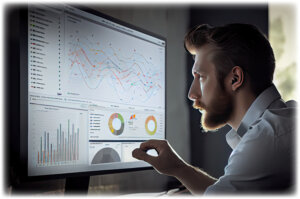
 What is it? Advanced analytics are the foundation for leveraging big data to discover deeper insights, make predictions, or generate recommendations. As such, they yield complex models using sophisticated techniques and tools such as data mining, machine learning, forecasting, visualization, neuro network, simulation, and multivariate statistics.
If you want to make predictions about future events, you need predictive analytics. This type of analytics uses machine learning and data mining techniques to define the likelihood of future trends and behaviors based on current and historical data. Businesses use predictive analysis to minimize risks, save costs, and increase competition.
Prescriptive analytics aims for optimal recommendations, answering “what should be done?” This type of analytics, pulling together descriptive and predictive analytics, is widely used in business to identify the best options for a specific situation. Prescriptive analytics uses techniques such as simulation, algorithms, machine learning, graph analysis, and more.
Let our consultants help you improve your efficiency and overall work through advanced analytics.
How can we help you?
- Evaluate and select the appropriate models and statistical analysis methods
- Discover unknown properties in the data (e.g. data mining)
- Identify and segment data into groups representing key attributes (including using k-mean or hierarchical clustering analytics)
- Create predictive models about future events using predictive modeling
- Provide recommendations on finding best course of actions in a scenario given the available data
- Build statistical models using machine learning. This includes supervised and unsupervised machine learning
- Supervised: Regression and classification. It includes both linear and tree-based models
- Unsupervised: Principal component analysis, cluster analysis
- Perform spatial analysis to explain patterns and its spatial expression in terms of geometry
- Analyze RNA-seq or microbiome data (including quality control and DE analysis)
Why You Should Go Beyond Microsoft Excel (Part 2)
Articles and White Papers About Software The Problem with Relying Solely on Dashboards Read More Why You Should Go Beyond Microsoft Excel (Part 2) Read More Why You Should Go Beyond Microsoft Excel (Part 1) Articles and White Papers About Software The Problem with Relying Solely on Dashboards Read More...
Read More
Why You Should Go Beyond Microsoft Excel (Part 1)
Articles and White Papers About Software The Problem with Relying Solely on Dashboards Read More Why You Should Go Beyond Microsoft Excel (Part 2) Read More Why You Should Go Beyond Microsoft Excel (Part 1) Articles and White Papers About Monitoring & Evaluation To RCT or Not? Randomized Control Trials...
Read More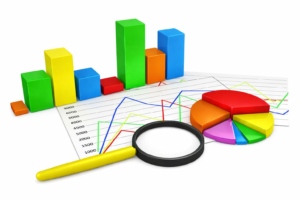
Which Six Assumptions Of Multiple Regression Should You Always Test?
Articles and White Papers About Quantitative Statistical Analysis Why You Should Go Beyond Microsoft Excel (Part 2) Read More Which Six Assumptions Of Multiple Regression Should You Always Test? Read More Addressing Challenges in Chemical Engineering: Using Six Sigma to Reduce Defects Articles and White Papers About Quantitative Research Design...
Read More